This post may contain affiliate links. If you purchase through these links, I may earn a small commission at no extra cost to you. I only recommend products and resources that I believe will genuinely help you manage money wisely and grow in your financial journey.
Many Christians desire to manage their money wisely but feel overwhelmed about where to start. Bills, groceries, unexpected expenses, and saving for the future can quickly create stress. The good news is that budgeting does not have to feel restrictive or complicated. When approached through faith, budgeting becomes a tool for stewardship, peace, and purpose.
A Christian budget is simply a plan for how you will manage the resources God has entrusted to you. Instead of reacting to every expense, budgeting allows you to be intentional with your finances. The Bible reminds us in Proverbs 21:5 that “The plans of the diligent lead to profit as surely as haste leads to poverty.” Planning your money is part of being a faithful steward.
Why Budgeting Matters for Christians
Budgeting helps bring clarity and reduces financial stress. When you know where your money is going, you can make decisions that align with your values and priorities.
A faith-based approach to budgeting usually focuses on four simple areas:
Giving – honoring God with generosity
Saving – preparing for the future and emergencies
Needs – housing, food, transportation, and bills
Lifestyle spending – entertainment, hobbies, and extras
When these categories are planned ahead of time, it becomes easier to avoid overspending and feel more confident about your financial choices.
Start with Awareness
The first step in any budget is understanding your income and expenses. Many people underestimate how much they spend each month because they do not track it.
Take time to write down:
- Your monthly income
- Fixed expenses (rent, mortgage, insurance)
- Variable expenses (groceries, gas, dining out)
Seeing everything in one place can be eye-opening and empowering. Instead of feeling out of control, you begin to see opportunities to adjust and improve.
How a Budget Workbook Can Help
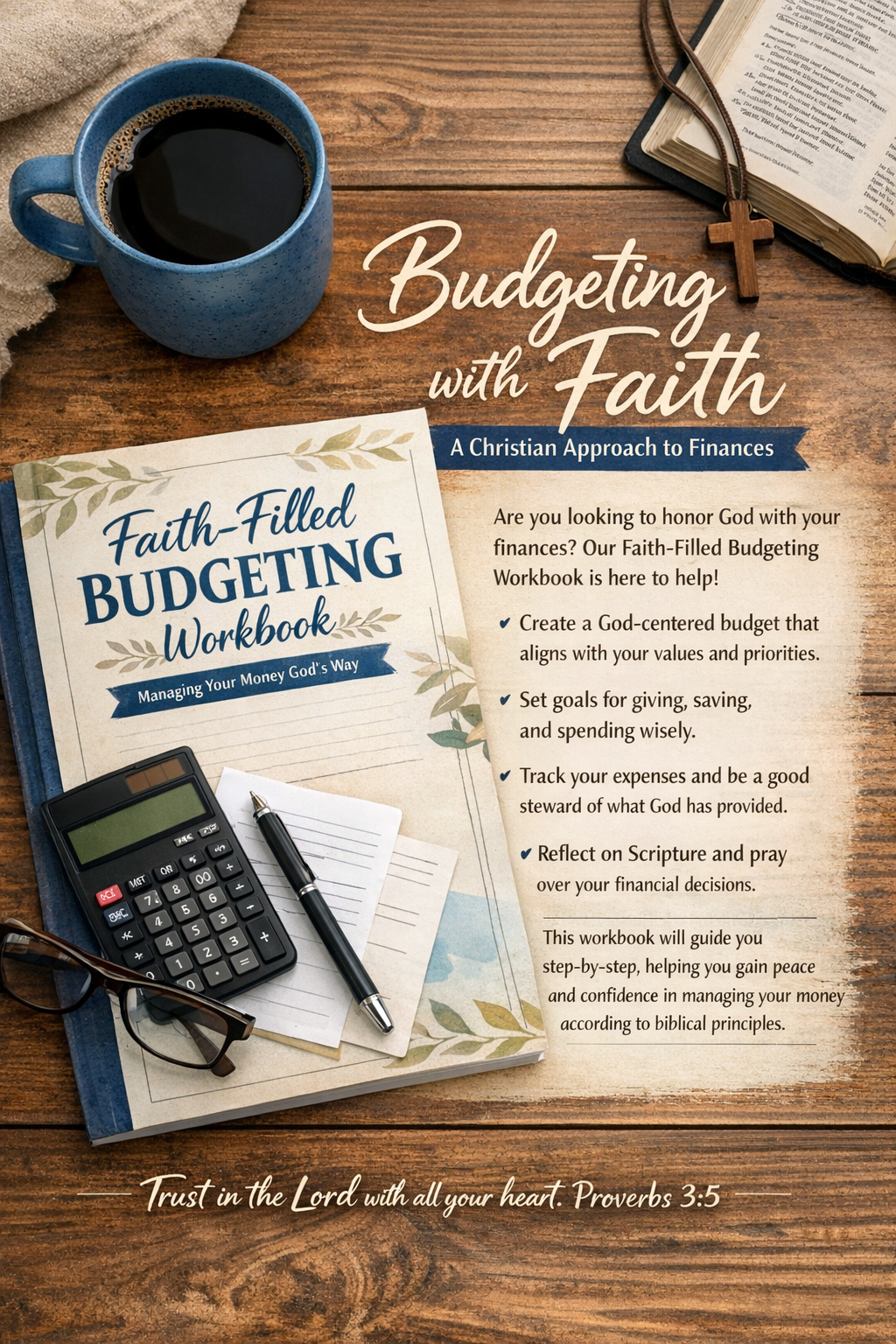
One of the easiest ways to stay organized is by using a budget workbook. A workbook provides structure so you don’t have to create everything from scratch.
A good budgeting workbook often includes:
- Monthly budget planning pages
- Expense trackers
- Debt payoff trackers
- Savings goal worksheets
- Reflection pages to review progress
Writing your numbers down by hand can make budgeting feel more intentional and less overwhelming. Many people find that physically tracking their spending helps them stay accountable and motivated.
For Christians, a budgeting workbook can also become a space for reflection and prayer over financial decisions. Instead of simply focusing on numbers, it becomes a tool for aligning money with faith and values.
Progress Over Perfection
One of the biggest mistakes beginners make is expecting their budget to be perfect right away. The truth is that budgeting is a learning process. Your first few months may require adjustments, and that is completely normal.
Think of your budget as a guide rather than a strict rulebook. Over time, you will discover spending habits, saving opportunities, and ways to manage money that work best for your household.
Faith and Financial Peace
Budgeting is not about restriction—it is about freedom. When you plan your finances with intention, you remove much of the stress and uncertainty that comes with money.
With a simple plan, a helpful budgeting workbook, and a focus on stewardship, managing money can become a peaceful part of your faith journey.
Small steps taken today can lead to long-term financial stability and the ability to live generously and confidently.
Leave a Reply