Category: Uncategorized

  • You Pray About Money… But You’re Still Doing This Every Week

    You Pray About Money… But You’re Still Doing This Every Week

    This contains affiliate links. If you purchase from a link, I will earn a small commission at no extra charge to you.

    You pray about your finances.

    You ask God for help.
    For discipline.
    For change.

    But if you’re honest…

    you’re still managing your money the same exact way.

    You swipe your card without a plan.
    You check your account after the fact.
    You hope it’s “not that bad.”

    And when it is…

    You tell yourself:

    “I’ll do better next time.”

    Be honest…

    How many times have you said that?


    This Is The Cycle You Haven’t Broken

    Let’s walk through it:

    You get paid → you feel relief
    You spend → it feels fine in the moment
    You check your account → something feels off
    You adjust → try to fix it
    You fall behind → feel stressed

    Then repeat it.

    Next month.

    Same cycle.

    You already know this is true.


    So Why Hasn’t Anything Changed?

    Not because you don’t care.

    Not because you’re bad with money.

    Because nothing is controlling your money BEFORE you spend it.

    Right now, your system is:

    • Spend
    • React
    • Regret
    • Repeat

    And that system will never create progress.


    Read This Slowly — This Is The Real Problem

    You are asking God to change your finances…

    while continuing the exact habits that keep you stuck.

    That’s not faith.

    That’s avoidance.

    The Bible teaches stewardship.

    “Whoever can be trusted with very little can also be trusted with much.” — Luke 16:10

    Which means:

    • You don’t guess
    • You don’t react
    • You don’t wait

    You lead your money


    Here’s The Habit That Keeps You Stuck

    This is it.

    You decide what to do with your money AFTER you spend it

    If that doesn’t change…

    nothing will.

    Because when you don’t decide in advance:

    your money disappears on you

    You’ve already seen that happen.

    Over and over.


    If You’re Being Honest… This Has Been Your Pattern

    You’ve been here before.

    Trying harder.
    Hoping it sticks.
    Promising yourself this time will be different.

    But it hasn’t been.

    Because effort isn’t the problem.

    Structure is.

    That’s why you need something that forces you to stay on track:


    Let’s Be Honest About What Happens If Nothing Changes

    If you keep doing this:

    • Next month looks the same
    • The stress comes back
    • The frustration comes back
    • The cycle repeats

    Six months from now?

    Still stuck

    One year from now?

    Still repeating it


    Now Picture This Instead

    You know exactly:

    • what you can spend
    • what’s already allocated
    • where every dollar is going

    No guessing.
    No surprises.
    No stress when you check your account.

    That’s what having a system does.


    So What’s Actually Missing?

    Not motivation.

    Not discipline.

    Structure.

    Because you cannot stay consistent without something that:

    • shows you everything clearly
    • forces you to plan ahead
    • keeps you accountable

    This Is What Fixes That

    You need something that:

    • forces you to plan BEFORE you spend
    • makes your money visible at all times
    • keeps everything in one place
    • removes the ability to “guess”

    That’s the difference


    This Is The System That Does That

    If you’re serious about not repeating this cycle again…

    Stop guessing and start controlling your money here:

    This isn’t about motivation.

    It’s about structure you cannot ignore

    Because once you have that:

    • you stop reacting
    • you stop guessing
    • you stop repeating the same mistakes

    Let’s Make This Simple

    If you don’t change your system:

    your results will not change

    If you do:

    your results will

    That’s it.


    So The Real Question Is

    Are you going to:

    Keep doing what you’ve been doing
    and stay stuck…

    Or finally use something that forces change?


    If You’re Actually Ready To Break This Cycle

    Then stop relying on memory.

    Stop guessing.

    Stop reacting.

    Get the system here:

    Because the difference between:

    • stress
      and
    • control

    is having a plan you actually follow

  • Why Most Christians Struggle With Money (And the Biblical Budget That Actually Works)

    Why Most Christians Struggle With Money (And the Biblical Budget That Actually Works)

    You’re praying about your finances…
    trying to do better…
    telling yourself “this month will be different.”

    But somehow… it never is.

    The stress is still there.
    The money still disappears.
    And nothing actually changes.

    Here’s the truth most people don’t realize:

    It’s not that you don’t care about your money. It’s that you’ve never been shown a system that actually works.


    The Real Reason You Still Feel Stuck Financially

    Most people don’t fail with money because they’re lazy.

    They fail because they’re guessing.

    • Guessing what they can spend
    • Guessing what’s left in their account
    • Guessing if they’re “doing okay”

    And that creates a cycle:
    Stress → Avoidance → More stress

    You try to fix it…
    but without a clear plan, nothing sticks.


    Why This Keeps Happening (Even If You’re Trying)

    Most people think they have a money problem.

    They don’t.

    They have a system problem.

    No system means:

    • Overspending without realizing it
    • No clear direction
    • Starting over every single month

    And over time…

    That becomes exhausting.


    What the Bible Actually Teaches About Money

    God doesn’t expect perfection with money.

    But He does expect stewardship.

    “Whoever can be trusted with very little can also be trusted with much.” — Luke 16:10

    That means:

    • Being intentional
    • Being disciplined
    • Having a plan

    Not hoping things work out…

    Planning for them to.


    What Biblical Money Management Really Looks Like

    Let’s simplify it — because it doesn’t need to be complicated.

    1. Know Your Numbers

    You need to clearly see:

    • Your income
    • Your expenses
    • Where your money is going

    If you don’t know this…

    You’re always guessing.


    2. Tell Your Money Where to Go

    Instead of reacting after you spend…

    You decide in advance.

    Every dollar gets a purpose:

    • Bills
    • Giving
    • Saving
    • Spending

    3. Stay Consistent (Not Perfect)

    You don’t need to get it right every time.

    You just need to:
    Keep showing up and adjusting

    Consistency beats perfection every time.


    Why Most Budgets Fail (And What Works Instead)

    Let’s be honest…

    Most budgeting advice feels:

    • Overwhelming
    • Complicated
    • Hard to stick with

    So people quit.

    Not because budgeting doesn’t work…

    But because their system doesn’t work for them.


    The Turning Point Most People Miss

    This is where everything changes:

    When you stop trying harder
    And start using a system that works for you

    Because motivation fades.

    Discipline gets hard.

    But a simple system?

    That keeps you on track.


    The Simple Biblical Budget That Actually Works

    If you want to start taking control of your money today, follow this:

    Step 1: Write down your income

    Know exactly what you’re working with.


    Step 2: Plan your expenses before the month starts

    This gives you control instead of stress.


    Step 3: Track every dollar

    This is where awareness and discipline grow.


    Step 4: Adjust as needed

    No guilt. Just progress.

    This is exactly where most people fall off — not because they don’t care, but because they don’t have a system that keeps everything clear and organized.

    That’s why using something structured like this simple budget planner makes it much easier to follow through and stay consistent month after month.


    The Tool That Makes This Actually Stick

    Here’s where most people struggle:

    They try to keep everything in their head…
    or scattered across notes and apps.

    And eventually…

    They fall off track.

    If you want this to actually work long-term…

    You need something that:

    • Keeps everything in one place
    • Is simple to follow
    • Makes consistency easier

    A Simple Tool That Makes This Work

    If you’ve ever felt like:

    • You start strong… then fall off
    • You don’t know where your money went
    • You just need something simple that works

    This is where having a clear system changes everything. If you’re serious about getting control of your money and not repeating the same cycle every month, you need something simple you can actually stick with.

    Most people don’t fail because they don’t care… they fail because they don’t have a system that keeps them consistent. Using this simple budget planner can make it much easier to stay consistent without feeling overwhelmed.

    This type of planner helps you:

    • Clearly organize your finances
    • Stay consistent month after month
    • Build better money habits without overwhelm

    And that’s the difference between:
    Trying… and actually making progress


    What Happens When You Finally Have a Plan

    When you start managing your money this way…

    Everything begins to shift.

    You feel:

    • Less stress
    • More clarity
    • More confidence

    You stop wondering where your money went…

    And start telling it where to go.


    The Truth About Financial Peace

    Financial peace isn’t about:

    • Making more money
    • Being perfect
    • Getting lucky

    It comes from:
    Having a clear plan and following it

    And once you do that…

    Everything changes.


    Ready to Finally Take Control?

    If you’re tired of guessing…
    starting over…
    and feeling stuck…

    It’s time for a simple system that actually works because the sooner you have a plan…

    The sooner your situation starts to change.

    You don’t need a perfect plan to start…

    But you do need a real one.

    If you’re tired of guessing, starting over, and feeling stuck every month…

    this simple budget planner can help you finally stay consistent and take control of your money.

    The sooner you start…
    the sooner things begin to change.

  • Why You’re Still Broke (And The Biblical Plan That Actually Works)

    Why You’re Still Broke (And The Biblical Plan That Actually Works)

    This post may contain affiliate links. If you purchase through these links, I may earn a small commission at no extra cost to you.


    You’re Not Bad With Money — You’ve Just Been Taught the Wrong Way

    Let’s be honest…

    You’ve tried to do better with money.

    You’ve said:

    • “I need to stop spending”
    • “I’ll save more next month”
    • “I just need more discipline”

    But somehow, you always end up back in the same place.

    Stressed about bills.
    Wondering where your money went.
    Feeling like you’re always behind.

    And it’s frustrating — because you care.

    So why isn’t anything changing?


    The Truth Most People Miss

    It’s not that you’re bad with money.

    You’ve been following a system that doesn’t work.

    The world says:

    • Spend now, fix it later
    • Debt is normal
    • More income will solve everything

    But if that worked, you wouldn’t still feel stuck.

    God’s way is different — and it actually leads to peace.


    3 Reasons You Still Feel Stuck Financially

    1. No Clear Plan

    The Bible says in Proverbs 21:5:
    “The plans of the diligent lead to profit…”

    If you don’t tell your money where to go, it disappears.


    2. Debt Is Quietly Controlling You

    Proverbs 22:7 says:
    “The borrower is slave to the lender.”

    Debt keeps you stressed, limited, and stuck in a cycle that’s hard to break.


    3. You’re Relying on Motivation Instead of a System

    Motivation fades.

    Without a system, you fall back into old habits.


    What The Bible Actually Teaches About Money

    God doesn’t want you living in financial stress.

    He calls us to:

    • Stewardship
    • Discipline
    • Faithfulness

    And when you follow His principles, peace follows.


    A Simple Biblical Plan That Actually Works

    Step 1: Give Every Dollar a Purpose

    Stop wondering where your money went.
    Start telling it where to go.


    Step 2: Stop Letting Debt Control You

    You don’t need to live in this cycle forever.


    Step 3: Build Consistent Habits

    Small steps done consistently change everything.


    Step 4: Stay Committed

    This is where most people quit — not because it doesn’t work, but because they don’t see results fast enough.


    The Missing Piece Most People Never Fix

    If you’ve never followed a clear, step-by-step system before, that’s usually the missing piece.

    That’s why resources like The Total Money Makeover have helped so many people finally take control of their money.

    Take a look here


    Why Most People Stay Stuck

    Most people don’t stay stuck because they don’t want change.

    They stay stuck because they don’t have a plan to follow when things get hard.

    So they start budgeting, then quit.
    They try saving, then stop.
    They promise change, then repeat the cycle.

    Not because they’re weak — but because they’re trying to figure everything out on their own.


    This Is What Finally Makes It Click

    If you’re tired of starting over, you don’t need more tips.

    You need a step-by-step system you can actually follow.

    That’s why so many people turn to The Total Money Makeover.

    What makes this different is:

    • It gives you a clear plan with no guessing
    • It shows you how to get out of debt step-by-step
    • It helps you build habits that actually stick

    And most importantly, it makes everything feel simple and doable — even if you’ve struggled for years.

    If you’re serious about finally breaking the cycle and taking control of your money, this is one of the best places to start.

    Check price and reviews here


    What Happens When You Finally Get This Right

    When you follow a real plan:

    You stop feeling overwhelmed.
    You gain control over your money.
    You start seeing real progress.
    You feel peace instead of pressure.

    And that peace affects every area of your life.


    You Don’t Need More Money — You Need a Better System

    It’s not about making more money.

    It’s about following a proven, biblical plan consistently.


    Start Today — Not Someday

    Nothing changes if nothing changes.

    You can keep hoping things improve, trying random tips, and feeling stuck…

    Or you can decide today to do things differently.

    Start with a real plan. Stay consistent.

    If you’re ready for that next step, take a look at The Total Money Makeover.

    See details here

  • Why You’re Still Struggling Financially (And What the Bible Says to Do Instead)

    Why You’re Still Struggling Financially (And What the Bible Says to Do Instead)

    This post may contain affiliate links. I may earn a small commission at no extra cost to you.

    If you’ve been praying for financial breakthrough but nothing is changing… this might be the reason.

    Most people don’t have a money problem.

    They have a system problem.

    And the Bible actually warns about this.


    The Real Reason Nothing Is Changing

    It’s not that you don’t care.

    It’s not that you’re not trying.

    It’s that most people are managing money without a clear plan.

    The Bible says:

    “Whoever can be trusted with very little can also be trusted with much…” — Luke 16:10

    If we don’t manage what we already have, more money won’t fix anything.


    What The Bible Actually Teaches About Money

    God calls us to be good stewards.

    That means:

    • Knowing where your money is going
    • Planning ahead
    • Being intentional

    But here’s the problem…

    Most people never actually track anything.


    What Finally Changed Things For Me

    I used to feel stuck.

    I knew I should budget… but I never stayed consistent.

    That’s when I realized:

    👉 I didn’t need more motivation
    👉 I needed something simple I could actually follow


    The Simple Tool That Helps You Take Control

    If you’re serious about changing your finances, you need structure.

    Something that helps you:

    • Track your spending
    • Plan your monthly budget
    • Stay consistent

    That’s why I recommend using a simple budget planner like this:

    👉 Start tracking your money here:

    This type of planner gives you a clear place to:

    • Write your monthly budget
    • Track expenses
    • Monitor savings and debt

    Why This Actually Works

    Most people fail because they:

    • Guess their spending
    • Avoid looking at numbers
    • Quit after a few days

    A system fixes all of that.

    It forces consistency.

    And consistency is what creates change.


    What You Should Do Starting Today

    Don’t overcomplicate this.

    Start simple:

    • Write down your income
    • Track every expense
    • Follow a plan

    Even if it’s not perfect.


    Final Thought

    God can bless your finances…

    But you still have to manage them.

    When you combine:
    ✔ Biblical principles
    ✔ Consistent action
    ✔ The right tools

    That’s when things begin to change.


    If you’re ready to take control of your money, start here:

    👉 Get a simple budgeting system here:


  • Why You’re Still Struggling Financially (And What the Bible Says to Do Instead)

    Why You’re Still Struggling Financially (And What the Bible Says to Do Instead)

    Affiliate Disclosure: This post may contain affiliate links. If you purchase through these links, I may earn a small commission at no extra cost to you.

    Why Does It Feel Like You Can’t Get Ahead?

    Have you ever felt like no matter what you do, your finances just don’t improve?

    You try to budget.
    You try to save.
    You tell yourself this month will be different.

    But somehow, you still feel stuck.

    If that’s you, you’re not alone.

    And here’s the truth most people don’t realize:

    👉 Financial struggle is often not just about money — it’s about habits, mindset, and how we manage what God has already given us.

    The good news?

    God’s Word gives us clear direction on how to handle money — and when you follow it, things can begin to change.


    🙏 1. You’re Not Putting God First in Your Finances

    One of the biggest reasons people struggle financially is because they try to manage everything on their own.

    The Bible says:

    “Commit to the Lord whatever you do, and He will establish your plans.” — Proverbs 16:3

    When God is not at the center of your financial decisions, it’s easy to feel overwhelmed and uncertain.

    What to Do Instead:

    Start inviting God into your finances daily.

    • Pray before making financial decisions
    • Ask for wisdom with spending
    • Trust Him with your plans

    👉 When God leads, clarity follows.

    If you don’t currently have a system, I recommend starting with a simple Christian budget planner to help you stay organized and focused. You can find it by clicking HERE


    💸 2. You Don’t Have a Clear Plan for Your Money

    Many people believe they have a money problem, but what they really have is a plan problem.

    The Bible reminds us:

    “The plans of the diligent lead surely to abundance…” — Proverbs 21:5

    Without a plan, money disappears quickly.

    What to Do Instead:

    Create a simple budget you can actually stick to.

    • Write down your monthly income
    • List your expenses
    • Give every dollar a purpose

    👉 A budget is not about restriction — it’s about control and peace.


    ⚠️ 3. You’re Living Beyond Your Means

    It’s easy to fall into the trap of spending more than you earn.

    Whether it’s small daily purchases or bigger financial decisions, it all adds up.

    The Bible warns us:

    “The borrower is slave to the lender.” — Proverbs 22:7

    Debt and overspending keep you stuck.

    What to Do Instead:

    Start simplifying your lifestyle. If you struggle with overspending, I recommend this to help you get back on track and take control of your spending . Learn how!

    • Focus on needs over wants
    • Cut unnecessary expenses
    • Be mindful before every purchase

    👉 Financial freedom starts when spending becomes intentional.


    💖 4. You’re Not Practicing Good Stewardship

    Everything we have ultimately belongs to God.

    We are called to manage it wisely.

    “Whoever can be trusted with very little can also be trusted with much…” — Luke 16:10

    If we don’t handle small amounts well, more money won’t fix the problem.

    What to Do Instead:

    Be intentional with what you already have.

    • Track your spending
    • Avoid waste
    • Make thoughtful financial decisions

    👉 God blesses those who are faithful with what they’ve been given.


    💡 5. You Lack Consistent Financial Habits

    Many people start strong… but don’t stay consistent.

    And consistency is where real change happens.

    What to Do Instead:

    Build simple daily and weekly habits.

    • Check your spending regularly
    • Review your budget weekly
    • Stay aware of your financial choices

    👉 Small consistent actions lead to big results over time.


    💰 6. You Believe More Money Will Fix Everything

    This is one of the biggest misconceptions.

    More money doesn’t fix poor habits — it often makes them worse.

    If nothing changes, the cycle continues.

    What to Do Instead:

    Focus on improving your habits first.

    • Learn to manage what you have
    • Build discipline
    • Stay committed to growth

    👉 Financial peace comes from control, not just income.


    💖 7. You’re Not Giving (And It Matters More Than You Think)

    Giving may feel difficult when money is tight, but it’s a powerful principle.

    The Bible says:

    “Give, and it will be given to you…” — Luke 6:38

    Giving shifts your heart from fear to trust.

    What to Do Instead:

    Start small and stay consistent.

    • Give what you can
    • Give with a willing heart
    • Trust God in the process

    👉 Generosity builds faith and breaks fear.


    🧠 8. Your Mindset Is Holding You Back

    What you believe about money shapes your reality.

    If you constantly think:

    • “I’ll never get ahead”
    • “Money is always a problem”
    • “I’m bad with finances”

    You will stay stuck.

    The Bible reminds us:

    “As a man thinks in his heart, so is he.” — Proverbs 23:7

    What to Do Instead:

    Renew your mindset.

    • Replace fear with faith
    • Speak positively about your finances
    • Believe that change is possible

    👉 Your financial future starts in your thinking.


    ✨ Final Thoughts

    If you’ve been struggling financially, it doesn’t mean you’ve failed.

    It simply means something needs to change. If Your ready for change and would like to see how you can join a FREE community of like minded people earning their 1st dollar online, CHECK THIS OUT!

    When you begin to:
    ✔ Put God first
    ✔ Follow a plan
    ✔ Practice discipline
    ✔ Shift your mindset

    You will begin to see progress.

    Maybe not overnight — but steadily, faithfully, and with peace.

    👉 Start today. One small step at a time.

    Because with God guiding your finances, you are never truly stuck.

  • Take Control of Your Spending: A Smarter Approach to Your Budget

    Take Control of Your Spending: A Smarter Approach to Your Budget

    This post may contain affiliate links. If you purchase through these links, I may earn a small commission at no extra cost to you. I only recommend products and resources that I believe will genuinely help you manage money wisely and grow in your financial journey.

    In a world where personal finances can feel overwhelming, it’s easy to fall into habits that drain your wallet without giving you much in return. Most of us know we should spend less and save more — but how to do it consistently is another story.

    That’s where modern financial learning tools step in. Instead of generic budgeting sheets or hard‑to‑apply advice, there are structured programs emerging that guide you step‑by‑step toward a more effective way of handling your money.

    Why Traditional Budgeting Falls Short

    Simply tracking expenses or setting arbitrary limits doesn’t usually change behavior. You might know where your money is going, but you still feel stuck — buying what you want instead of what you need. To change that pattern, it helps to understand the why behind your choices and to build practical habits that support lasting results.

    A Structured Path to Financial Awareness

    Educational systems designed specifically for financial improvement aim to do more than list tips — they give you:

    • Tools for prioritizing expenses that align with your goals
    • Frameworks for recognizing wasteful spending patterns
    • Examples and case studies showing how others shifted their habits
    • Supportive environments where you can learn alongside others striving for the same outcome

    This deepens your understanding of money and turns abstract concepts into actionable strategies.

    Build Skills That Last

    The real value in guided learning comes from building skills, not just getting temporary motivation. As you work through lessons and start applying them:

    • You become more confident making decisions about money
    • You learn how to adjust your plan when life circumstances change
    • You can identify opportunities to invest in your future rather than just covering short‑term costs

    These are habits that benefit you long after you finish the course.

    Who Can Benefit

    This kind of structured guidance isn’t just for people who are deep in debt or struggling financially. It’s equally useful for:

    • Young professionals beginning to build wealth
    • Families trying to balance expenses with savings goals
    • Anyone who wants to maximize the benefit of every dollar

    While basic budgeting apps have their place, deeper educational approaches build the mindset shift that many of us need to truly transform our finances.

    Final Thought

    Managing money effectively isn’t about restriction — it’s about choice. When you understand how to direct your spending in ways that support your long‑term goals, you take control of your finances instead of letting them control you.

  • Smart Spending Swaps: A Christian Family Guide to Saving Money Without Feeling Deprived

    Smart Spending Swaps: A Christian Family Guide to Saving Money Without Feeling Deprived

    This post may contain affiliate links. If you purchase through these links, I may earn a small commission at no extra cost to you. I only recommend products and resources that I believe will genuinely help you manage money wisely and grow in your financial journey.

    Many Christians today feel overwhelmed by money stress. Bills, rising prices, and uncertainty can make it feel like financial peace is always out of reach. But the Bible reminds us that God desires wisdom, stewardship, and peace in how we handle our finances.

    Learning how to live simply while creating new income opportunities online can help you move toward freedom and stability. It’s not about chasing wealth — it’s about stewarding what God gives us well and creating margin in our lives.

    This guide will help you understand how Christians are learning practical ways to reduce financial stress, live more intentionally, and build beginner-friendly income streams online.

    Why Many Christians Are Turning to Simple Living

    Simple living is about aligning your spending with your values. Instead of constantly buying more, many believers are focusing on:

    • Reducing unnecessary expenses
    • Avoiding debt when possible
    • Creating multiple income streams
    • Using their skills to serve others online

    Proverbs 21:5 reminds us:

    “The plans of the diligent lead to profit as surely as haste leads to poverty.”

    Being intentional with money helps create room for generosity, giving, and peace.

    The Power of Learning New Skills Online

    One of the biggest changes in the past few years is how accessible online income opportunities have become.

    Today, beginners are learning skills such as:

    • Digital product creation
    • Affiliate marketing
    • Blogging
    • Pinterest traffic strategies
    • Selling printable resources

    These skills allow people to build income streams from home while still focusing on faith, family, and purpose.

    Many Christians are drawn to programs that teach step-by-step systems designed specifically for beginners. Instead of complicated business models, these programs focus on simple strategies that anyone can learn.

    Why Beginners Like Step-By-Step Training

    Starting something new can feel overwhelming. That’s why structured training is helpful.

    Beginner-friendly online training often includes:

    • Video lessons explaining each step
    • Community support with other learners
    • Tools for creating digital products
    • Guidance on getting traffic to your offers

    For many people, the biggest benefit is having a clear roadmap instead of trying to figure everything out alone.

    This type of structured approach helps eliminate confusion and allows beginners to focus on learning one step at a time.

    How Faith and Finances Work Together

    Money itself isn’t the goal. The goal is wise stewardship.

    When Christians manage money well, it allows them to:

    • Give more generously
    • Reduce financial stress
    • Spend more time with family
    • Focus on their calling instead of constant financial pressure

    Luke 16:10 reminds us:

    “Whoever can be trusted with very little can also be trusted with much.”

    Learning new ways to earn income while practicing good budgeting and stewardship can help create long-term stability.

    Practical Steps You Can Start Today

    If you are interested in building better financial habits while exploring online income opportunities, start with these simple steps:

    1. Create a simple budget so you know where your money is going.
    2. Reduce unnecessary spending and focus on needs over wants.
    3. Learn a beginner online skill such as affiliate marketing or digital products.
    4. Stay consistent — building anything worthwhile takes time.
    5. Pray for wisdom in your financial decisions.

    Small steps done consistently can create big change over time.

    A Helpful Resource for Beginners

    If you are curious about learning how people are creating simple online income streams from home, there are beginner training resources that walk you through the process step-by-step.

    These programs often focus on practical strategies like selling digital products, using social media traffic, and building simple systems that can grow over time.

    The key is finding education that focuses on simplicity, stewardship, and sustainable growth, rather than hype or unrealistic promises.

    Final Thoughts

    Financial peace doesn’t come from chasing money. It comes from wisdom, discipline, and trusting God with your plans.

    When you combine biblical stewardship with practical skills, you create opportunities for stability, generosity, and freedom from constant financial stress.

    Start small. Stay faithful. And remember that even small changes in how you manage and earn money can make a big difference over time.

  • Christian Faith Money Management for Young People: Simple Biblical Budgeting Tips

    Christian Faith Money Management for Young People: Simple Biblical Budgeting Tips

    This post may contain affiliate links. If you purchase through these links, I may earn a small commission at no extra cost to you. I only recommend products and resources that I believe will genuinely help you manage money wisely and grow in your financial journey.

    Learning how to manage money early in life can make a huge difference in your future. Many young people feel overwhelmed by bills, spending habits, and saving goals. The good news is that Christian faith money management offers simple principles that help guide financial decisions with wisdom and purpose. By combining practical budgeting skills with biblical values, young people can build a strong financial foundation that honors God and brings peace of mind.

    One of the first principles of Christian money management is stewardship. In the Bible, believers are reminded that everything we have ultimately belongs to God. This means money is not just something to spend however we want—it is something we are called to manage wisely. When young people understand that they are stewards of God’s blessings, it changes how they view spending, saving, and giving.

    A practical step toward better stewardship is creating a simple budget. A budget is simply a plan for your money. It helps you track what you earn and decide where your money should go before you spend it. Young people who learn to budget early are far less likely to struggle with debt later in life.

    Start by writing down your monthly income. This might include money from a part-time job, allowance, side hustle, or small online business. Next, list your expenses. Common expenses for young people might include gas, entertainment, food, subscriptions, or school supplies.

    Once you see where your money is going, divide it into three important categories:

    1. Give
    Giving is a powerful part of Christian financial living. Many believers choose to tithe or support ministries, churches, or people in need. Giving reminds us that money is not our ultimate source of security—God is.

    2. Save
    Saving money creates stability for the future. Even setting aside a small amount each week can build a strong habit. A good goal for beginners is saving at least 10% of income if possible.

    3. Spend Wisely
    Spending is necessary, but wisdom matters. Before making purchases, ask yourself: Do I really need this? Practicing thoughtful spending helps prevent impulse buying and regret later.

    For many young people, staying consistent with budgeting can be the hardest part. This is where a budget planner workbook can be extremely helpful. Writing down your income, expenses, savings goals, and giving plans in one place makes money management much easier. Budget planners also help you track progress and stay motivated.

    Many beginners find success using a simple budget planner bundle that includes monthly budget sheets, savings trackers, and expense logs. These tools make it easy to stay organized and build strong financial habits over time.

    Christian money management is not about becoming rich. Instead, it is about living with wisdom, gratitude, and discipline. When young people learn to manage money with biblical values, they develop habits that can bless them for the rest of their lives.

    By starting early, using helpful budgeting tools, and keeping faith at the center of financial decisions, young believers can grow into confident stewards of the resources God has placed in their h

  • Christian Budgeting: A Faith-Based Way to Manage Your Money

    Christian Budgeting: A Faith-Based Way to Manage Your Money

    This post may contain affiliate links. If you purchase through these links, I may earn a small commission at no extra cost to you. I only recommend products and resources that I believe will genuinely help you manage money wisely and grow in your financial journey.

    Many Christians desire to manage their money wisely but feel overwhelmed about where to start. Bills, groceries, unexpected expenses, and saving for the future can quickly create stress. The good news is that budgeting does not have to feel restrictive or complicated. When approached through faith, budgeting becomes a tool for stewardship, peace, and purpose.

    A Christian budget is simply a plan for how you will manage the resources God has entrusted to you. Instead of reacting to every expense, budgeting allows you to be intentional with your finances. The Bible reminds us in Proverbs 21:5 that “The plans of the diligent lead to profit as surely as haste leads to poverty.” Planning your money is part of being a faithful steward.

    Why Budgeting Matters for Christians

    Budgeting helps bring clarity and reduces financial stress. When you know where your money is going, you can make decisions that align with your values and priorities.

    A faith-based approach to budgeting usually focuses on four simple areas:

    Giving – honoring God with generosity
    Saving – preparing for the future and emergencies
    Needs – housing, food, transportation, and bills
    Lifestyle spending – entertainment, hobbies, and extras

    When these categories are planned ahead of time, it becomes easier to avoid overspending and feel more confident about your financial choices.

    Start with Awareness

    The first step in any budget is understanding your income and expenses. Many people underestimate how much they spend each month because they do not track it.

    Take time to write down:

    • Your monthly income
    • Fixed expenses (rent, mortgage, insurance)
    • Variable expenses (groceries, gas, dining out)

    Seeing everything in one place can be eye-opening and empowering. Instead of feeling out of control, you begin to see opportunities to adjust and improve.

    How a Budget Workbook Can Help

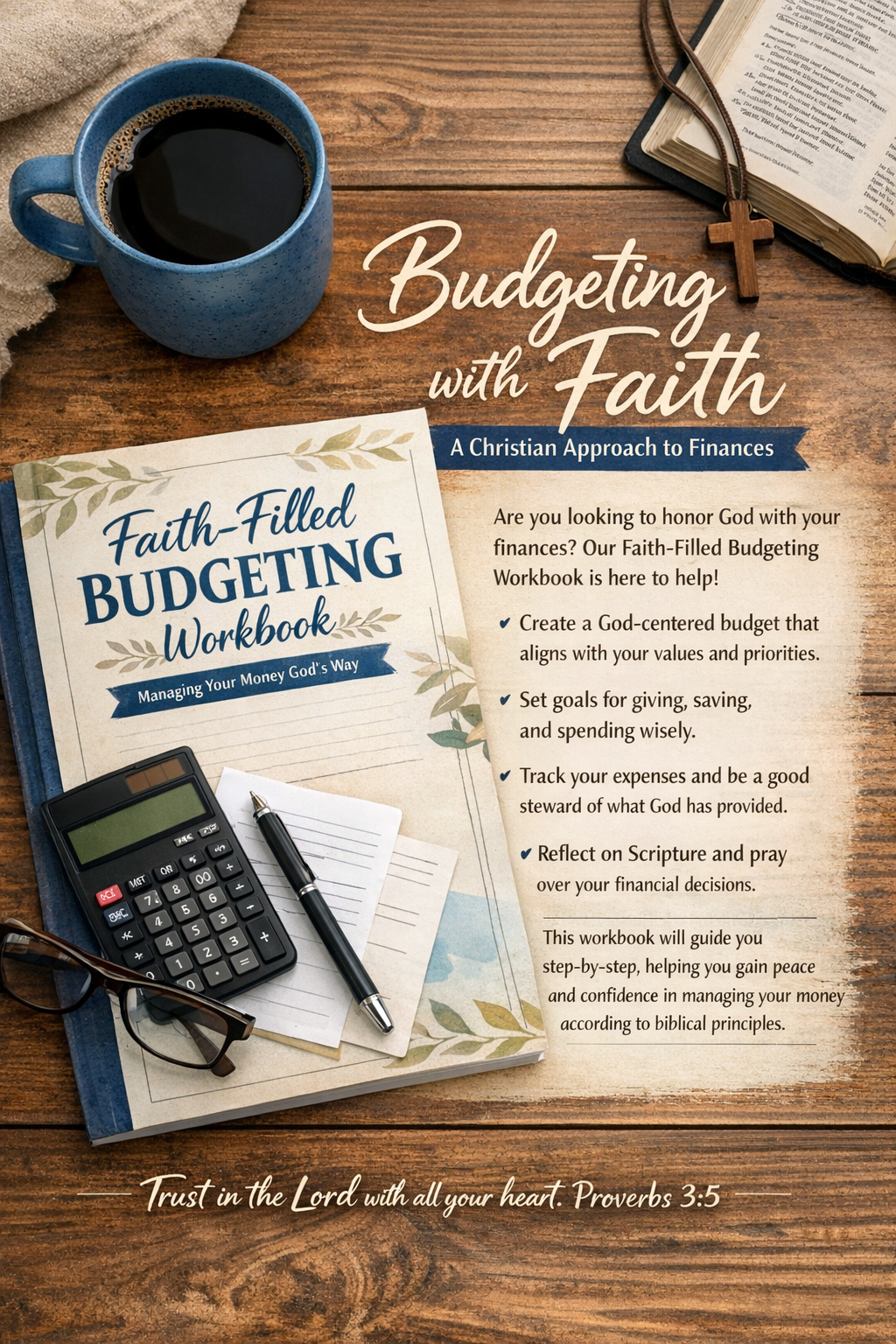
    One of the easiest ways to stay organized is by using a budget workbook. A workbook provides structure so you don’t have to create everything from scratch.

    A good budgeting workbook often includes:

    • Monthly budget planning pages
    • Expense trackers
    • Debt payoff trackers
    • Savings goal worksheets
    • Reflection pages to review progress

    Writing your numbers down by hand can make budgeting feel more intentional and less overwhelming. Many people find that physically tracking their spending helps them stay accountable and motivated.

    For Christians, a budgeting workbook can also become a space for reflection and prayer over financial decisions. Instead of simply focusing on numbers, it becomes a tool for aligning money with faith and values.

    Progress Over Perfection

    One of the biggest mistakes beginners make is expecting their budget to be perfect right away. The truth is that budgeting is a learning process. Your first few months may require adjustments, and that is completely normal.

    Think of your budget as a guide rather than a strict rulebook. Over time, you will discover spending habits, saving opportunities, and ways to manage money that work best for your household.

    Faith and Financial Peace

    Budgeting is not about restriction—it is about freedom. When you plan your finances with intention, you remove much of the stress and uncertainty that comes with money.

    With a simple plan, a helpful budgeting workbook, and a focus on stewardship, managing money can become a peaceful part of your faith journey.

    Small steps taken today can lead to long-term financial stability and the ability to live generously and confidently.

  • Christian Budgeting: Reducing Stress with Faith-Based Money Practices

    Christian Budgeting: Reducing Stress with Faith-Based Money Practices

    This post may contain affiliate links. If you purchase through these links, I may earn a small commission at no extra cost to you. I only recommend products and resources that I believe will genuinely help you manage money wisely and grow in your financial journey.

    Managing money can be one of the greatest sources of anxiety for Christians trying to honor God, care for family, and live within their means. Christian budgeting isn’t just a set of numbers; it’s a spiritual practice that ties stewardship, generosity, and wise planning together. When budgets are faith-informed, they reduce guilt, clarify priorities, and create space for both provision and generosity—three powerful stress-relievers for everyday life.

    Stress around money often comes from uncertainty: unclear priorities, rising debt, or the feeling that faith and finance are in conflict. A faith-centered budget reframes those pressures. Instead of shame about past choices, Christian budgeting invites confession, planning, and practical habits: a simple monthly plan, a short emergency fund, and regular giving. These steps create predictability, which lowers anxiety and improves decision-making.

    Another common stress point is mixed messages—church culture that emphasizes generosity alongside consumer-driven expectations. Books and resources that combine biblical teaching with concrete steps help bridge that gap. They show how stewardship and joy can coexist, which calms the soul while giving the brain a clear action plan. Practical tools—budget templates, debt-payoff methods, and weekly check-ins—move faith from abstract conviction into everyday habit. Habit formation reduces the cognitive load that fuels worry.

    Finally, community matters. Christian budgeting is easier and less isolating when done with a spouse, small group, or accountability partner. Discussing money in a spiritual context normalizes the struggle and replaces secrecy with shared wisdom. That social support reduces shame and makes consistent budgeting sustainable. Find helpful books here!

    Each of these books offers something different: a disciplined plan for debt and budgeting, a theological reorientation toward generosity, and a comprehensive biblical primer on money. Read one for practical mechanics, another to reshape your heart toward giving, and the third to tie theology and practice together. Together they form a balanced approach that addresses both the technical and spiritual sources of money stress. You can find a recommended book on Christian Budgeting here>